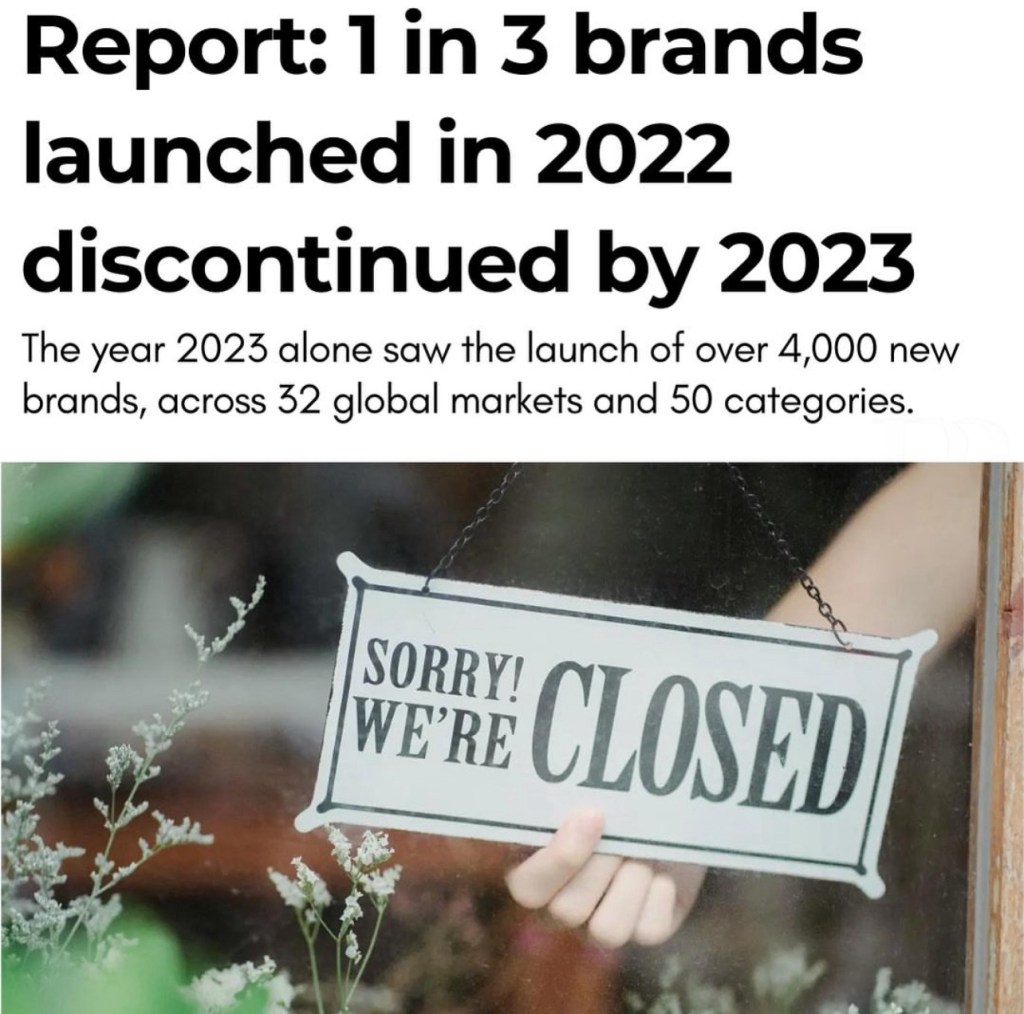
In 2023, Euromonitor reported an alarming trend: 1 out of every 3 brands launched in 2022 failed. This statistic isn’t just a number; it’s a wake-up call for entrepreneurs and business leaders to prioritize sustainability in their business models. It certainly shocked me. A deep dive into the reasons behind these failures points towards a common thread – a lack of emphasis on building a resilient and adaptable brand strategy. Adaptability is something I learned in Business School but is something that I still struggle with in practical business management. Adaptability requires constant change and any business leaders knows the cost of business change, it’s painful on all aspects of the business and takes up a lot of energy.
Studies, such as those highlighted in the Harvard Business Review, underscore the importance of integrating sustainability not as an afterthought but as a core component of brand identity and business operations. I find this as an oxymoron for startups because when we are focused on starting we are hardly looking at the long term benefits of the immediate costs of sustainable models. Consultants and experts can help us do this but these people are usually very expensive for a start up to afford. So the question remains, what do we do? Some journals have attempted to help us with the below;
To navigate this challenging landscape, businesses must adopt a multifaceted approach. First, understanding the market and consumer trends is crucial. An article in the Journal of Business Strategy illustrates how companies that conduct thorough market research and engage in continuous learning are more likely to anticipate changes and adapt swiftly. Second, fostering a strong brand identity that resonates with consumers on an emotional level can create loyal customers and differentiate your brand in a crowded marketplace, as detailed in Forbes. Lastly, embedding sustainability into the DNA of your brand by focusing on ethical practices, environmental responsibility, and social impact not only contributes to the global good but also appeals to the growing segment of conscious consumers, as argued in the Stanford Social Innovation Review.
Building a lasting brand in today’s volatile market requires a strategic focus on resilience, adaptability, and genuine commitment to sustainability. By learning from the pitfalls that led to the high failure rate of newly launched brands in 2023, businesses can develop strategies that ensure longevity and success. Embracing sustainability is not just about survival; it’s about thriving in the future business landscape.”
 elinamablah.com
Leave a comment